Meeting Tips

Radzivon Alkhovik
Teams now have ten times more communication channels than they had in the office, but communication has gotten worse. Slack with 50 channels, Zoom meetings every hour, email, Telegram, tasks in tracker, comments in documents—information is scattered everywhere and nowhere simultaneously. Managers spend half their day searching for the right message in chat history, and developers receive critical edits through personal messages instead of project channels.
Remote work didn't just change where we work. It exposed a fundamental problem—most teams never built a communication system consciously. In the office, this was compensated by spontaneous coffee machine conversations and the ability to approach a colleague with a question. Remotely, every interaction requires a conscious choice of channel, format, and time.
The mymeet.ai team works with Russian companies rebuilding communication for distributed format. Understanding principles of effective remote interaction becomes a basic skill for any business.
Remote Work - Communication Challenges in Distributed Teams
The transition to remote format exposes problems that were previously solved automatically due to physical proximity. What worked in the office stops functioning at a distance.
Main Remote Communication Problems
Loss of spontaneous information exchange hits team effectiveness. In the office you hear colleagues' conversations, see who's doing what, can quickly clarify details. Remotely, every question requires separate action—write a message, wait for response, possibly schedule meeting.
Information chaos intensifies with each new tool. Part of discussions go in chat, part in meetings, part via email. New project participant can't quickly get context because information is scattered across five different systems without single entry point.
Gap between message and understanding grows without nonverbal signals. Text doesn't convey intonation, emotions, urgency. Simple "need to discuss" can mean either light clarification or critical problem—recipient forced to imagine context.
Typical signals of remote communication problems:
Employees ask same questions multiple times
Meetings end without concrete decisions and actions
Critical information lost in message flow
Project participants work with outdated data
Newcomers adapt for months instead of weeks
Context Loss and Information Gaps
Context evaporates instantly in asynchronous communication. Yesterday's chat discussion gets buried under 200 new messages, and a week later no one remembers what exactly was decided. Meeting participants interpret agreements differently, and a month later argue about who promised what.
New employees drown in information vacuum first months of work. In office they unconsciously absorb context through observation and casual conversations. Remotely have to explicitly request every detail, which slows adaptation and creates discomfort.
Time Zone Differences and Asynchronicity
Teams with geographic spread face problem of window for synchronous work. When Moscow wakes up, Vladivostok is already ending workday. Common meetings turn into torture for some participants—either very early morning or late evening.
Asynchronous communication solves time zone problem but creates new one—delays in receiving answers. Simple question that resolves in a minute in office stretches over a day. Chain of three clarifications turns into three-day correspondence.
Principles of Effective Communication in Remote Team
Successful remote teams build communication on clear principles that compensate for lack of physical proximity. These rules create predictability and reduce friction in daily interaction.
Synchronous vs. Asynchronous Communication
Synchronous communication works for complex discussions requiring brainstorming or quick decision-making. Video calls allow reading emotions, asking clarifying questions on the fly, jointly figuring out complex issues. But they're expensive in terms of time and interrupt deep work.
Asynchronous communication gives freedom to choose response time and formulate thoughts more carefully. Chat messages, task comments, documents—all can be processed at convenient time between focus work blocks. Team works more productively when most interaction happens asynchronously.
Communication Channel Selection Rule
Each channel has its purpose, and mixing them creates chaos. Chats suit quick questions and operational clarifications but work poorly for strategy discussion. Email is better for formal communications requiring capture. Meetings needed for complex discussions where live reaction matters.
Simple rule helps choose channel—if discussion takes more than five chat messages, better to call or write structured document. If decision affects others' work, it needs written capture in accessible place, not limited to verbal agreement.
Documentation as Remote Work Foundation
Written capture becomes only way to preserve knowledge in distributed team. What's not written down doesn't exist—this principle should become remote work rule. Decisions, discussions, processes, agreements need documenting immediately while context fresh.
Documentation replaces spontaneous knowledge exchange that happens in office naturally. New employee can independently figure out processes if they're described. Project participant sees decision history and understands why chose specific approach.
Documentation barrier should be low, otherwise people will postpone. Short notes better than perfect documents that never get written. Main thing—capture key information and make it searchable.
Tools for Organizing Remote Communication
Right tool set creates infrastructure for effective interaction. Choice depends on team size, work specifics, and data security requirements.
Messengers and Chats - Slack, Telegram, Teams
Messengers become center of operational communication in remote teams. Slack dominates in tech companies thanks to channel setup flexibility and integrations. Telegram chosen for work speed and no VPN need. Microsoft Teams integrates with rest of Microsoft ecosystem and popular in corporate sector.
Channel structure requires thoughtful architecture. Chaotic channel creation for every little thing leads to attention fragmentation. Reasonable approach—division by projects, functions, and discussion types with clear rules for using each channel.
Video Conferencing - Zoom, Google Meet, Telemost
Video platforms differ in stability and functionality. Zoom remains popular thanks to connection quality and large meeting moderation features. Google Meet convenient for teams using Google Workspace. Yandex.Telemost chosen by companies needing Russian legislation compliance.
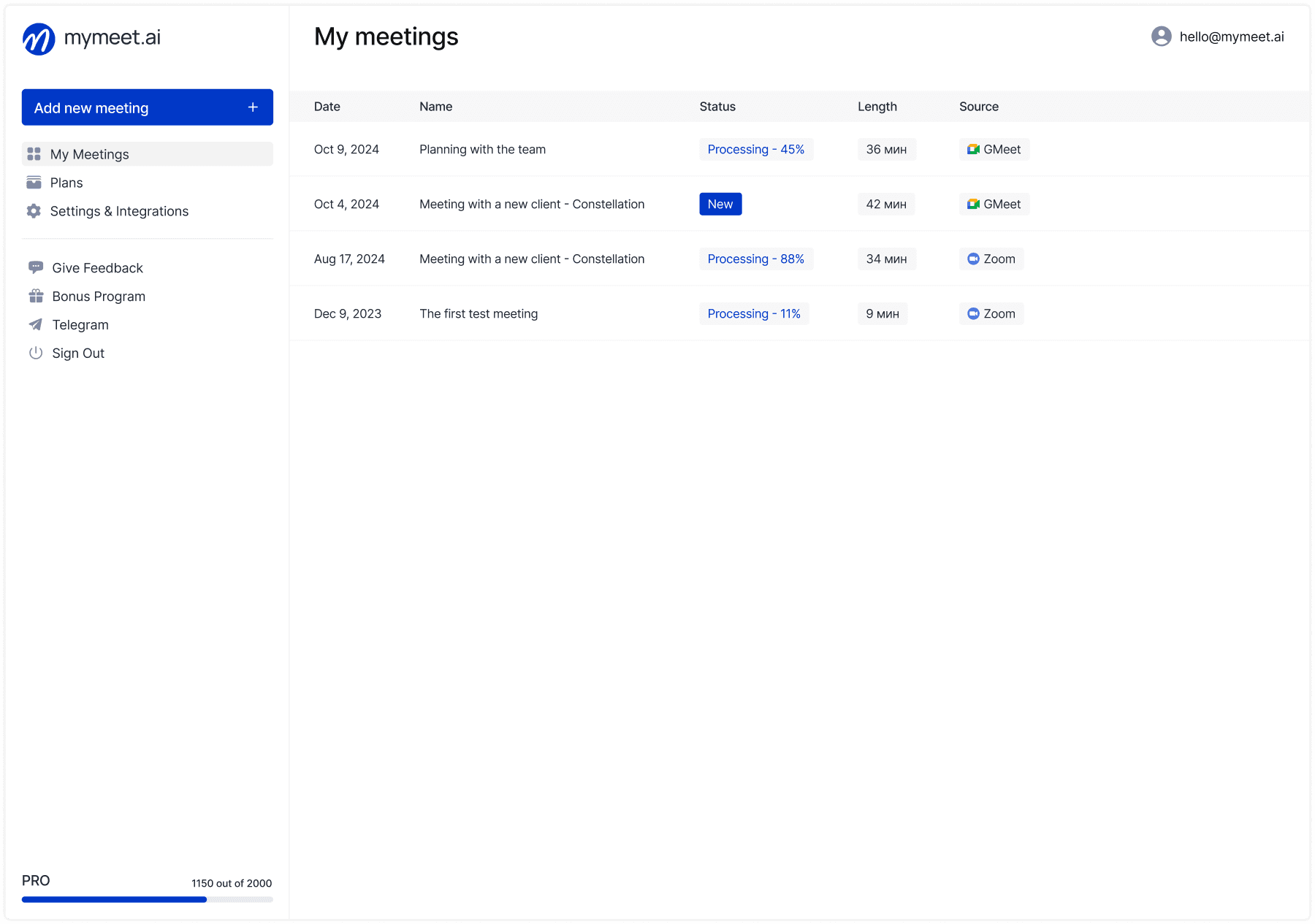
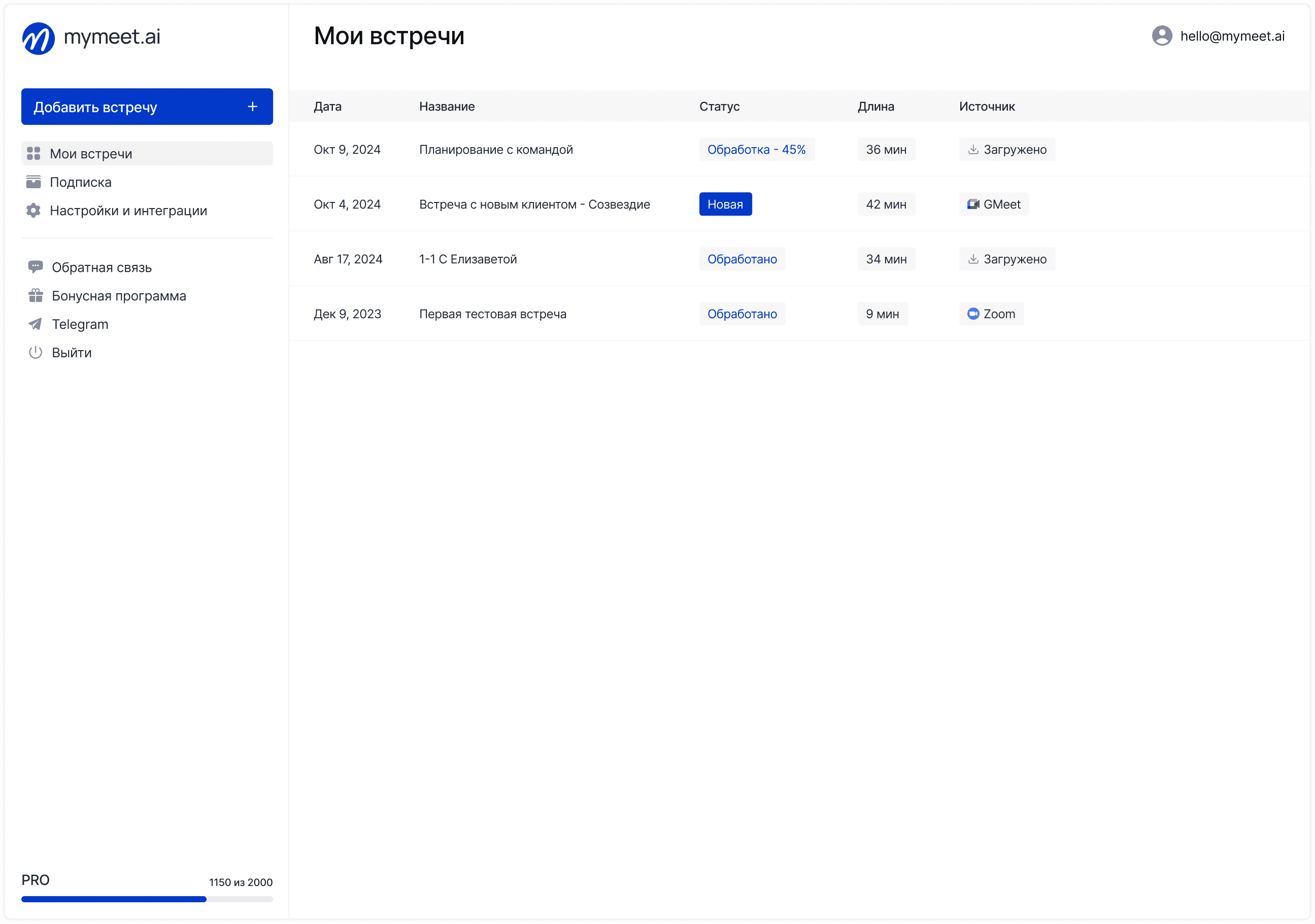
Meeting recording solves information loss problem but creates new one—nobody rewatches hour-long videos. Here AI tools for automatic recording processing like mymeet.ai help, turning video into structured reports with key agreements and tasks.
Task Management Systems - Jira, Trello, Asana
Task trackers become source of truth about project status. Jira dominates in development thanks to process setup flexibility and detailed analytics. Trello suits simple projects with visual management. Asana sits between them in complexity and functionality.
Discipline of updating task statuses determines system usefulness. If developers forget to move tasks to needed statuses, manager doesn't see real picture. Rule should be strict—task status always reflects reality, comments contain decision context.
Knowledge Bases - Notion, Confluence, Wiki
Centralized information storage critical for remote teams. Notion gaining popularity thanks to flexibility and ease of use. Confluence integrates with Jira and suits large organizations. Internal Wikis work for teams with special security requirements.
Information currency requires constant support. Outdated instructions worse than no instructions because mislead. Need process of regular key document review and clear last update date marking.
Communication Channel Comparison for Different Tasks:
Task Type | Best Channel | Alternative | Response Time |
Urgent question | Call, personal message | Chat with mention | Up to 5 minutes |
Task discussion | Tracker comments | Project chat | Up to 2 hours |
Complex decision | Video meeting with recording | Document for comments | 1-2 days |
Team informing | Announcement channel | Email digest | Not required |
Feedback | Personal 1-on-1 | Detailed letter | Scheduled |
Brainstorming | Synchronous session | Async document | Real-time |
Decision capture | Knowledge base | Meeting minutes | Right after decision |
How to Conduct Meetings in Remote Team
Remote meetings require more thorough preparation and structure than office ones. Without physical presence, participants distract easier, and unproductive calls felt more painfully.
Meeting Types for Remote Teams
Daily standups keep team informed about current work. Format should be strict—each participant in 2-3 minutes tells what did yesterday, what planning today, what blockers. Discussions moved to separate meetings, otherwise standup stretches to hour.
Project work meetings needed for synchronization and solving complex questions. Mandatory agenda sent in advance—without it meeting turns into topic wandering. Each agenda item should have owner and expected result.
1-on-1 meetings between manager and employee become even more valuable remotely. This is time for feedback, discussing career plans, identifying problems. Regularity key factor, random conversations once a quarter don't work.
Effective Online Meeting Rules
Clear agenda with timing saves all participants' time. Each item has allotted time, and facilitator monitors schedule adherence. Topics requiring separate discussion taken to separate meetings with needed participants.
Cameras on by default for meetings up to 10 people. Video strengthens engagement and allows reading nonverbal reactions. For large meetings cameras can be off for listeners, but speakers and active discussion participants should be visible.
One person speaks, others muted—basic audio hygiene rule. Background noise distracts and reduces recording quality. "Raised hand" function helps structure discussion and gives everyone opportunity to speak.
Meeting Frequency and Duration
Meetings should be shorter and more frequent than seems necessary. Better three 30-minute meetings per week than one 90-minute one. Short meetings maintain focus and don't exhaust participants.
25 and 50-minute rule works better than standard half-hour and hour slots. This gives participants time to switch between meetings, take break, prepare for next call. Continuous back-to-back meeting chain burns out team in a month.
mymeet.ai for Remote Communication Automation
Main problem of remote meetings—information lost right after call ends. Participants remember agreements differently, forget details, waste time restoring context. mymeet.ai solves this problem through automating meeting documentation and analysis.
mymeet.ai Features for Remote Teams:
✅ Automatic meeting connection - bot joins by link and records entire call without human participation
✅ Accurate transcription with speaker identification - system determines who said what and creates structured text
✅ Specialized AI reports - for sales, HR interviews, project meetings and other call types
✅ Automatic task extraction - AI finds all agreements, deadlines and owners without manual work
✅ Interactive recording analysis - can ask questions about past meeting and get detailed answers
✅ Corporate system integration - reports sent to CRM, team email or work chats
✅ Federal Law 152 compliance - data stored in Russia complying with legislation requirements
✅ Support for all popular platforms - Zoom, Google Meet, Teams, Telemost, Telegram
Case Study: How electro.cars Saves 15 Hours Per Week
Company electro.cars used mymeet.ai to automate client interaction process. Before implementation, sales department spent 15 hours per week creating meeting reports and coordinating tasks between managers.
Implementing mymeet.ai automated client meeting analysis, key requirement extraction and structured report creation. AI system identifies client needs, tracks deal stages and automatically updates CRM system.
Transformation result: 15 hours per week saved, improved customer service quality and increased sales conversion. Team gained ability to focus on building client relationships instead of administrative tasks.
Implement automatic meeting processing in your team. Contact consultant through form to set up AI analysis for your business processes.
Building Remote Communication Culture
Tools and processes only work in context of proper corporate culture. Remote communication culture forms through explicit rules and leaders' personal example.
Communication Rules and Protocols
Written communication protocol should be accessible to all employees. It describes which channel to use for which situations, how quickly response expected, when appropriate to call vs. write. This removes uncertainty and reduces team stress.
Focus work time explicitly protected. Can establish rule—no meetings before 11 AM or after 4 PM so everyone has time for deep work. "Do not disturb" statuses in messengers respected by entire team.
Transparency and Information Accessibility
"Open by default" principle works for most communications. Discussions conducted in common channels, not private messages, so everyone can see context. Exceptions—personal feedback and confidential information.
Centralized decision storage guarantees anyone can find needed information. After meetings decisions captured in knowledge base, important chat discussions moved to documents. Corporate information search works quickly and accurately.
Feedback in Remote Team
Regular feedback replaces spontaneous praise and comments that happen in office. Leaders give constructive feedback weekly, not accumulating remarks until quarterly review. Need to praise more often too—remote employees easily feel disconnected.
Communication process retrospectives help team improve. Once a month discuss what works in current approach, what hinders, what experiments to try. Communication constantly evolves with team growth.
Common Mistakes in Organizing Remote Communication
Understanding common mistakes helps avoid them. Most problems repeat from team to team with predictable frequency.
Excessive Meetings and Zoom Fatigue
Meetings by default—most common mistake. Every question solved with call, even if can be discussed asynchronously. Calendars filled to state where no time left for real work. People burn out from constant context switching.
Zoom fatigue accumulates faster than seems. Video calls require more cognitive resources than regular conversations—need to constantly look at screen, interpret nonverbal signals through video, control your image. After four hours of meetings per day, productivity drops to zero.
Insufficient Documentation
Verbal agreements evaporate instantly remotely. After meeting each participant remembers different details, week later no one remembers exact wording. Conflicts arise from different understanding of what was decided.
Lack of single source of truth creates information versioning. One person works from old document version, another from new. Instructions become outdated, but no one knows which version current. This slows work and creates errors.
Lack of Informal Communication
Water cooler disappearance kills team spirit gradually. People stop feeling connection with colleagues, become just task executors. Empathy between team members decreases, conflicts resolve harder.
Remote burnout happens imperceptibly. Boundaries between work and personal life blur, people work more hours but feel less satisfaction. No social support from colleagues that exists in office.
Remote Communication Effectiveness Metrics
Measurement helps understand if implemented changes work. Quality metrics show real state of team communication.
What to Measure and How to Analyze
Synchronization time—how many hours per week spent on meetings. This indicator growth signals asynchronous communication problems. Optimal value depends on work type, but more than 15 meeting hours per week for most roles—red flag.
Speed of getting answers to typical questions shows documentation quality and information accessibility. If same questions asked regularly, means knowledge not captured in accessible form.
Communication process satisfaction measured through regular surveys. Simple questions—how easy to find needed information, are there enough meetings, is there overload, do people feel informed. These indicators' trend more important than absolute values.
New employee adaptation time reflects documentation and onboarding quality. If newcomers need three months to become productive, signal of knowledge transfer problems.
Monitoring Tools
Calendar analytics show time distribution for meetings. Can see who's overloaded with calls, whether people have time for focus work, how meetings distributed throughout day.
Messenger metrics give idea of communication flow. Message count, response time, activity in different channels—all helps understand team interaction patterns.
Conclusion
Effective communication in remote team requires conscious approach and constant work. Problems don't solve by installing new tool—need clear processes, documentation culture and whole team discipline.
Start small—choose one communication channel and establish clear usage rules. Implement meeting documentation automation so knowledge isn't lost. Measure results and adjust approach based on team feedback.
Ready to automate communication in your remote team? Try mymeet.ai free—180 minutes of meeting processing without card attachment. Transform call chaos into structured knowledge system for your company.
FAQ
How to organize communication in remote team from scratch?
Start by defining basic communication channels—choose messenger, video platform, task tracker. Establish clear rules which channel used for what. Implement culture of documenting all decisions. Conduct short daily syncs and regular retrospectives to improve processes.
What tools best suit remote work?
For Russian teams optimal set—Telegram for operational communication, Yandex.Telemost or Zoom for video, Jira or Trello for task management, Notion or Confluence for knowledge base. Proper setup and usage discipline more important than specific tool choice.
How often to conduct meetings in remote team?
Daily short 15-minute standups, weekly project work meetings, biweekly 1-on-1s with manager. General rule—meetings should take no more than 15-20 hours per week for most roles. Rest of time needed for focus work.
Synchronous or asynchronous communication more effective?
Depends on task. Complex decisions requiring discussion—synchronous. Routine questions, statuses, information capture—asynchronous. Optimal balance—70-80% asynchronous communication, 20-30% synchronous for critical moments.
How to fight information gaps remotely?
Implement principle "everything important documented." After each meeting capture decisions in accessible place. Use single knowledge base for all information. Automate meeting minutes creation with AI tools like mymeet.ai.
What communication rules to establish for team?
Define response time for different channels, camera usage rules at meetings, "do not disturb" policy for focus work. Establish that all decisions captured in writing, discussions conducted in common channels not private messages. Document these rules and make accessible to all.
How to organize team work in different time zones?
Determine minimum working time overlap window for synchronous meetings. Maximally use asynchronous communication. Rotate meeting times so no one constantly works inconvenient hours. Record all meetings for those who can't attend.
How to preserve corporate culture with remote work?
Create space for informal communication—channels for hobby discussion, virtual coffee breaks. Conduct online team activities. Regularly communicate one-on-one with each employee. Broadcast company values through leaders' daily actions.
What metrics show remote communication effectiveness?
Weekly meeting time, speed of getting answers to typical questions, employee communication process satisfaction, new people adaptation time. Track these indicators' trends—deterioration signals system problems.
How to avoid Zoom fatigue in team?
Reduce meeting duration—use 25/50 minute format instead of 30/60. Take breaks between calls. Allow cameras off at large meetings. Move part of discussions to asynchronous format. Establish no-meeting days for focus work.
Radzivon Alkhovik