Task Management

Andrey Shcherbina
·
Updated on

A department head works from 8 AM to 9 PM. Constantly buried in tasks, meetings, and urgent issues. Complains about overload and no time for strategy. Meanwhile, their team of five is at 60% capacity, periodically sitting idle, waiting for instructions.
The paradox — the manager is drowning in work that employees could do. But doesn't delegate. "Faster to do it myself," "they'll do it worse," "no time to explain." The result — manager burnout, team degradation, stagnant growth.
The mymeet.ai team works with managers who learned to delegate effectively. They free up 50-70% of their time from operations, focus on strategy, while the team grows and develops through new tasks.
What Is Delegation and Why Managers Avoid It
Delegation sounds simple in theory. In practice, most managers do it poorly or not at all.
Definition of Delegation
Delegation is transferring a task and corresponding authority to an employee while the manager retains accountability for the result.
Key elements — task, authority, accountability. Transferring only a task without authority doesn't work. The employee can't make decisions, constantly returns for approval, and delegation turns into bureaucracy.
Delegation doesn't mean relinquishing accountability. The manager remains accountable for the result to their leadership. Delegation is a tool for achieving results through people, not a way to avoid accountability.
Why Delegation Is Critical for Growth
A manager doesn't scale. You have 8 working hours. If you do everything yourself, that's your productivity ceiling. A team of five provides 40 working hours per day. Refusing to delegate means refusing to scale.
The team doesn't grow without delegation. Employees who only do simple tasks don't develop. A year later, they're at the same level. Delegating complex tasks is the main tool for developing people.
The business depends on one person. If only the manager knows how to solve critical tasks, their departure or illness paralyzes work. Delegation distributes knowledge and reduces risks.
Main Fears About Delegation
"They'll do it worse than me" — the most common fear. Yes, they will. Especially the first few times. That's normal. The question isn't whether they'll do it perfectly the first time, but whether they'll learn to do it well over time.
"Faster to do it myself" — true in the short term. Explaining the task takes an hour, doing it yourself takes 20 minutes. But that works once. After delegation, you free those 20 minutes forever, having spent one hour once.
"I'll lose control" — the fear of perfectionist managers. Delegation doesn't mean losing control. It means transferring execution while maintaining control over results through checkpoints.
"They won't need me anymore" — a hidden fear of many. If employees learn to do my work, why am I needed? The logic is flawed. A manager is needed precisely so the team grows and handles complex tasks. That's an indicator of success, not irrelevance.
What Can and Cannot Be Delegated
Not all tasks are suitable for delegation. Understanding boundaries is critical for effective work distribution.
Which Tasks to Delegate First
Routine repetitive tasks — the first candidate for delegation. Weekly reports, request processing, metrics monitoring. Tasks with clear algorithms that consume time but don't require the manager's unique expertise.
Tasks for employee development — slightly more difficult than the employee's current level. If someone confidently handles level 3 tasks, delegate level 4 tasks. That's the growth zone.
Specialized tasks — work where the employee has deeper expertise than the manager. Ad setup if there's an advertising specialist on the team. Technical tasks if there's a technical expert.
Preparatory work — information gathering, initial analysis, material preparation. You make decisions based on prepared data, but an employee does the gathering.
What Only the Manager Should Do
Strategic decisions — development direction, priorities, key changes. This is the manager's zone of responsibility that cannot be delegated.
People management — hiring, firing, performance evaluation, career decisions. You can delegate gathering information for the decision, but the manager makes the decision.
Critical clients and partners — relationships with key clients and strategic partners often require manager involvement. You can delegate operational interaction, but the strategic level is your zone.
Confidential matters — financial information, reorganizations, conflicts between employees. Tasks requiring complete confidentiality are difficult to delegate.
Principle for Determining Tasks to Delegate
Ask yourself three questions about each task:
Can someone else do this task at least at 70% of my level?
Is this task the best use of my time?
Will delegating this task help the employee's development?
If at least two answers are "yes" — the task needs to be delegated.
Who to Delegate Tasks To
The right choice of executor determines delegation success. You can't delegate everything to everyone.
Assessing Employee Readiness
Readiness consists of two components — competence (can they) and motivation (do they want to). Both are important.
High competence + low motivation — the employee can but doesn't want to. Delegation without working on motivation leads to formal execution.
Low competence + high motivation — the employee wants to but can't. Delegation is possible with training and support.
Low competence + low motivation — don't delegate complex tasks. Start with simple ones or work on motivation.
Competence and Motivation Matrix
Quadrant 1 (high competence + high motivation) — delegate complex tasks with high autonomy. These are your stars who can be trusted with critical work.
Quadrant 2 (low competence + high motivation) — delegate tasks slightly above current level with training and support. Invest time in explanations. These people grow quickly.
Quadrant 3 (high competence + low motivation) — understand the reasons for low motivation. Perhaps the person has outgrown their current role. Or burned out. Delegation without solving the motivation problem won't help.
Quadrant 4 (low competence + low motivation) — delegate only simple tasks. If the situation doesn't change, perhaps the person isn't in the right role.
Development Through Delegation
Delegation is the main tool for employee development. People grow by doing tasks more difficult than their current level, not by reading management books.
Zone of proximal development — tasks 20-30% more difficult than the current level. Too simple — boring, no development. Too difficult — stress, risk of failure. Slightly more difficult than current — optimal growth zone.
Delegation matrix:
Task Type | Who to Delegate To | Control Level | Expected Result |
Routine, clear algorithm | Newcomers, low competence | High, frequent checks | 90-100% quality |
Standard task | Mid-level | Medium, checkpoints | 80-90% quality |
Complex, requires expertise | Experienced employees | Low, final check | 70-90% quality |
Development task | Motivated with potential | High with training | 60-80% first time |
Critical task | Top performers | Medium, key points | 85-100% quality |
How to Delegate Properly — Step-by-Step Process
Effective delegation is a structured process, not a spontaneous task handoff.
Preparing for Delegation
Define the result clearly for yourself. What should be the output? By what deadline? What are the quality criteria? Vague understanding of the result leads to vague execution.
Choose the executor based on competencies, workload, and growth potential. The best performer isn't always the right choice. Sometimes it's better to delegate to someone less experienced for development.
Prepare context and materials. What information is needed for execution? Access, documents, contacts. Prepare in advance so you don't slow down the start.
Assigning the Task to an Employee
Meet in person or call for delegating important tasks. Don't delegate complex tasks through chat messages. Live conversation ensures understanding and allows answering questions.
Explain context before describing the task. Why is this important? How does it connect to goals? Who will use the result? Context provides understanding of priorities and helps with decision-making.
Describe the result, not the process. Not "do it step by step like this," but "I need a report with analysis of three scenarios and recommendations." The result gives freedom in choosing the path.
Verify understanding through retelling. "Tell me in your own words what needs to be done." Head nods don't guarantee understanding. Retelling shows what was actually heard.
Transferring Context and Authority
Give the necessary authority for task execution. If the task requires coordination with another department, give authority to coordinate without you. If a budget up to $500 is needed, give the right to spend it.
Delegating a task without authority creates dependency. The employee returns to you for every decision, and you become a bottleneck.
Explain limitations — what's allowed, what isn't. "You can invite up to three people to the project," "Budget no more than $1,000," "The solution must be compatible with the current system."
Agreements on Control and Reporting
Define checkpoints in advance. Not "I'll let you know when it's ready," but specific dates for interim checks. For a month-long task — three checkpoints once a week.
Reporting format — how and what to communicate. Short status in Slack, detailed document, meeting. Depends on task complexity and executor experience.
What to do with problems — who to contact, how to escalate. "If a problem arises that you can't solve yourself, message me immediately, don't wait for the scheduled call."
Levels of Delegation Authority
Delegation isn't binary — "delegated / not delegated." There's a spectrum of autonomy levels.
Level 1 — Do Exactly as Told
Minimal autonomy. You give step-by-step instructions, the employee follows them exactly. Suitable for newcomers or critical tasks with clear algorithms.
Example — "Collect sales data for the month from CRM, build a chart in Excel using this template, send it to me for review."
Level 2 — Research and Propose Options
The employee researches and proposes, you decide. Suitable for tasks requiring analysis, but the manager makes the decision.
Example — "Study the three CRM systems we're considering. Compare by functionality, price, reviews. Prepare a recommendation by Friday."
Level 3 — Propose and Implement After Approval
The employee proposes a solution with reasoning, you approve or adjust, they implement. Suitable for significant decisions where your approval is needed.
Example — "Develop a content marketing plan for the quarter. Show me approval, then implement."
Level 4 — Implement and Report the Result
High autonomy. The employee makes decisions themselves, implements, and reports the result. You don't participate in the process, only receive the report.
Example — "Organize onboarding for the new employee. When you're done, tell me how it went."
Level 5 — Full Autonomy
Maximum autonomy. The employee isn't even required to report on every action. You trust them with an entire area of responsibility.
Example — "You're responsible for customer support. Do what you think is right, we'll discuss the results at the monthly meeting."
Level choice depends on employee competence, task criticality, and consequences of error. Newcomer + critical task = level 1-2. Experienced + non-critical = level 4-5.
Controlling Delegated Tasks
Delegation without control is abdication, not delegation. Control is necessary but must be reasonable.
Balance of Control and Trust
Micromanagement kills motivation and development. If you check every step, delegation loses its meaning. The employee doesn't make decisions, just follows your instructions.
Lack of control leads to failures. Delegated a task, didn't check for a month, at the deadline learned everything was done wrong. Too late to fix.
Balance depends on executor experience. Newcomers need frequent control and support. Experienced employees need rare checkpoints. Over time, you reduce control frequency.
Checkpoints and Feedback
Checkpoints — predetermined moments for checking progress. Not spontaneous "how's it going?" but a scheduled check on a specific date.
For a month-long task — checkpoints at 25%, 50%, 75% completion. This allows course correction if something's going wrong.
Feedback at checkpoints should be constructive. Not just "done poorly," but "this is good, this needs to change like this, here's why."
What to Do If the Task Is Done Poorly
Don't take the task back immediately. The first impulse — "let me do it myself." This kills learning and shows you don't trust.
Give the opportunity to fix it. Explain what's wrong and why. Give time for rework. Most people do significantly better the second time.
Analyze the cause of failure. Incorrect task assignment? Lack of competence? External factors? Understanding the cause helps prevent recurrence.
Avoiding Micromanagement
Micromanagement — controlling every step, constantly checking "how's it progressing?", requiring things to be done exactly your way.
Signs you're micromanaging:
Employee coordinates every minor decision with you
You know every detail of every task of every employee
Team waits for your instructions instead of acting
Employees are afraid to make decisions without you
Cure for micromanagement — clear result assignment instead of process, less frequent checks, focus on result rather than method of achievement.
mymeet.ai for Managing Delegation
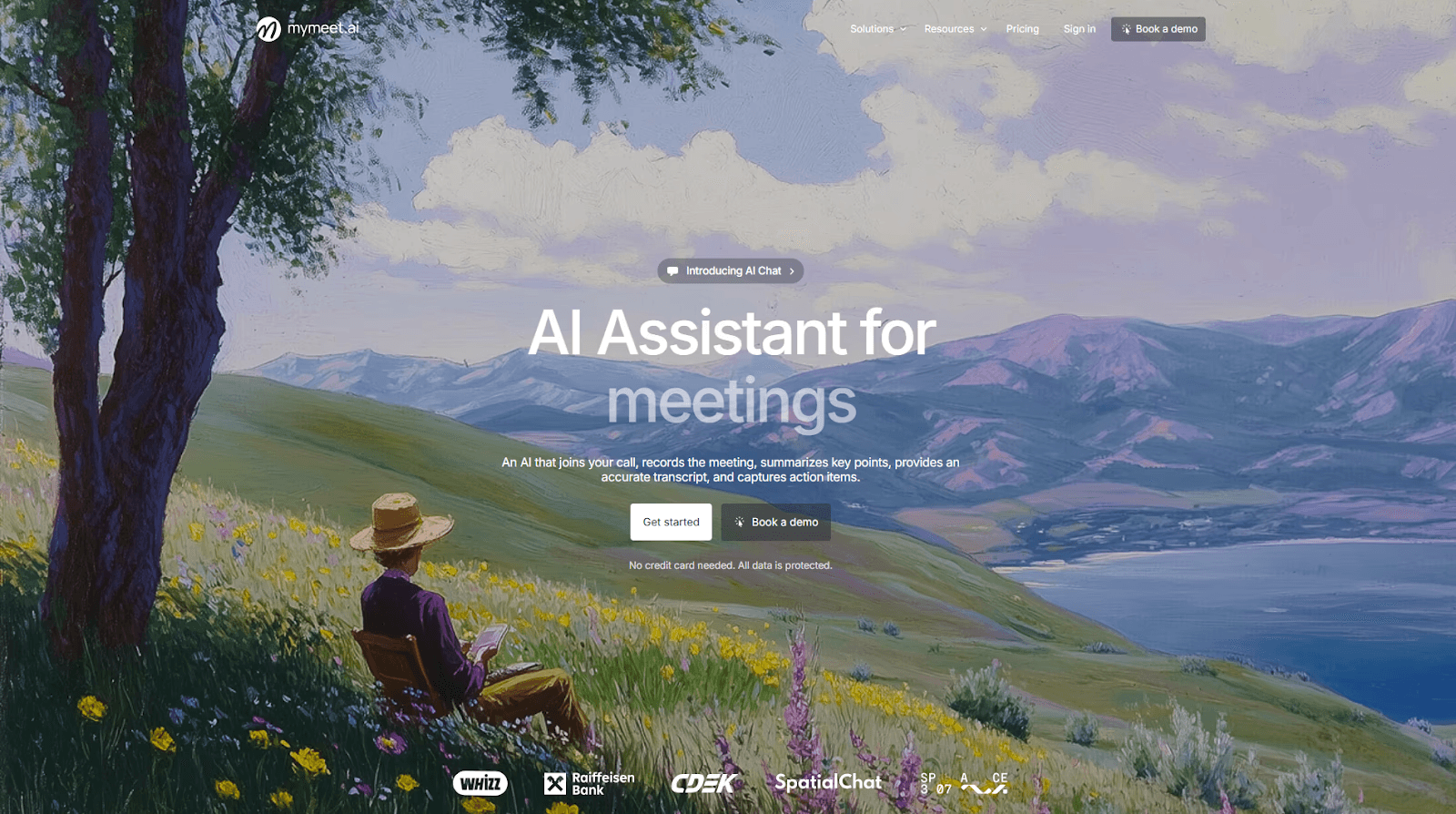
The main delegation problem is losing context and agreements. Delegated a task in a meeting, a week later you forgot the details, the employee doesn't remember exactly what was discussed. Result — misunderstanding and rework.
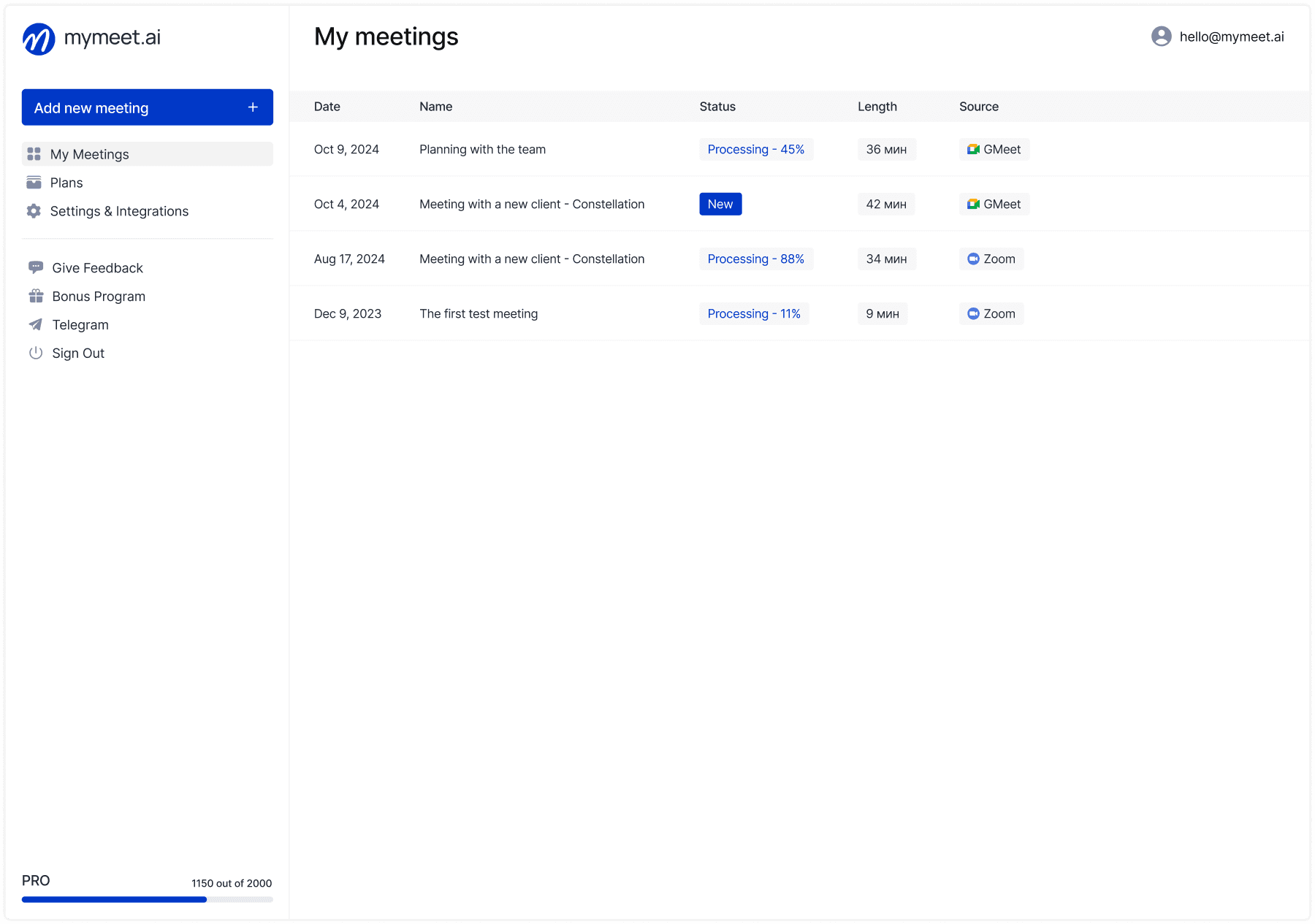
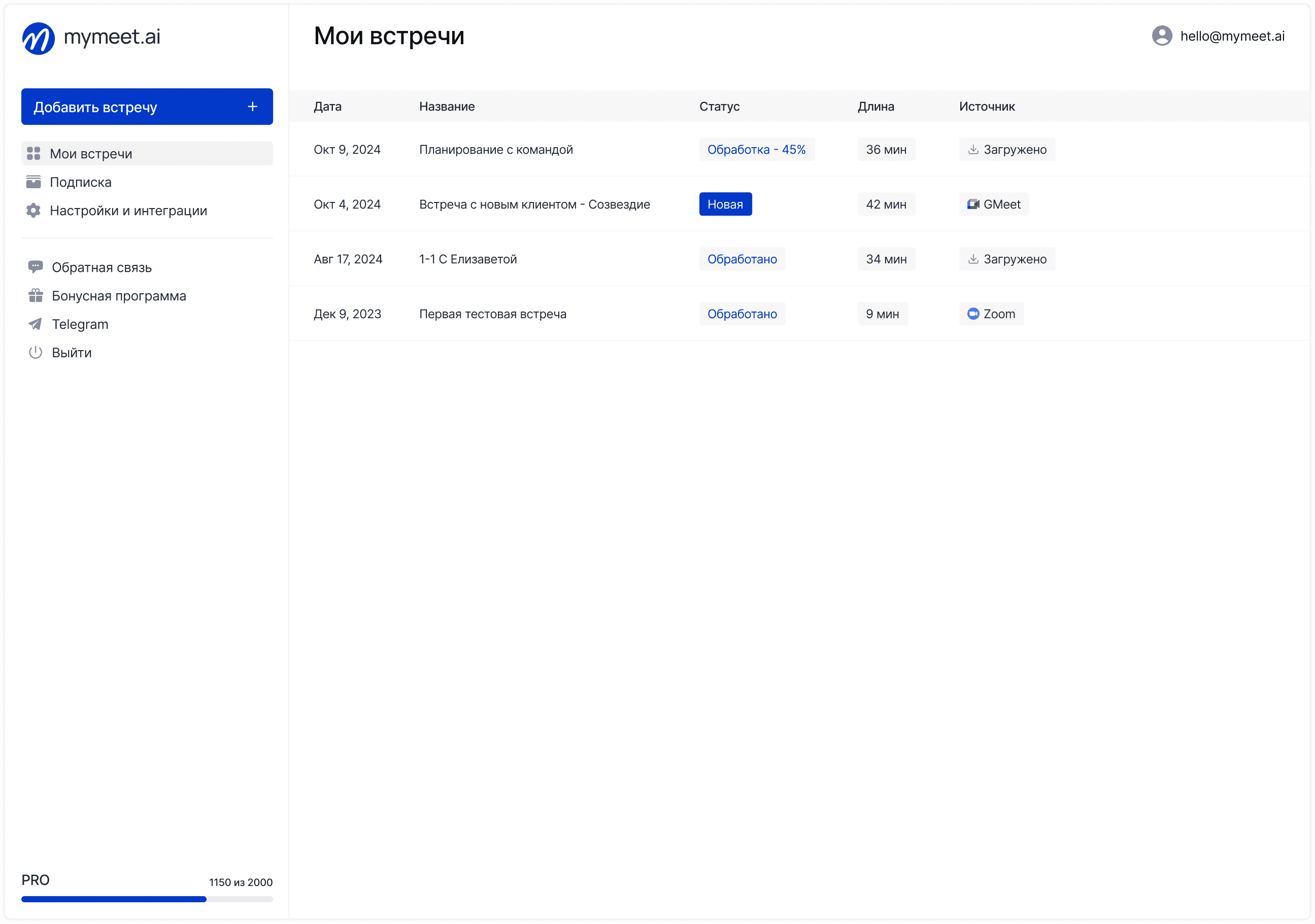
mymeet.ai is an AI meeting assistant that automatically captures all delegated tasks from conversations, extracts responsible parties, deadlines, and context. The system reminds about checkpoints and helps track progress without turning into micromanagement.
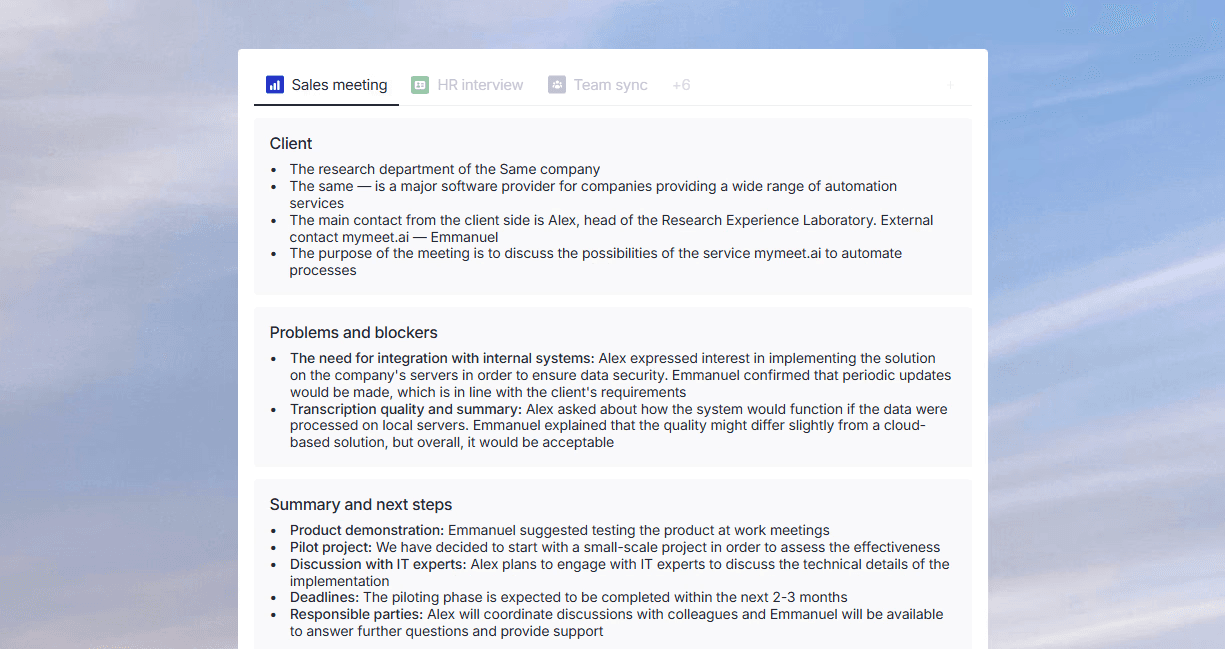
mymeet.ai capabilities for effective delegation:
✅ Automatic capture of delegated tasks — system finds all moments in conversation where you delegated something, extracts the task, executor, deadline
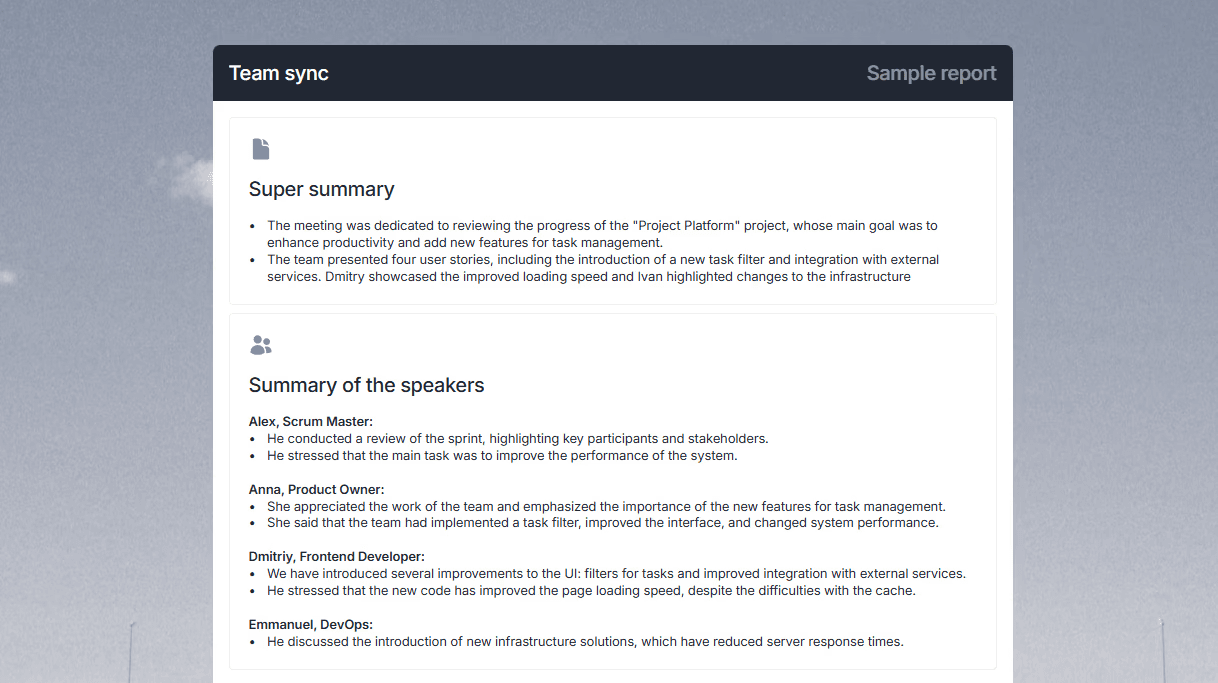
✅ Full delegation context — not just the task is saved, but also the discussion context, result criteria, limitations
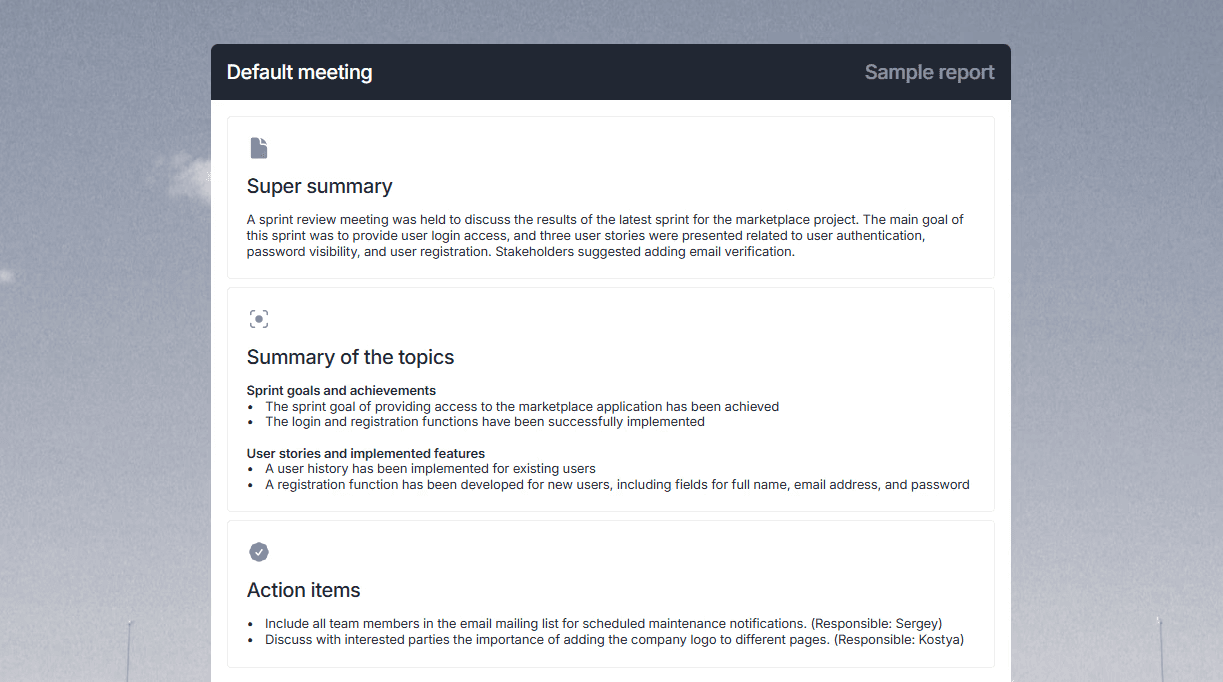
✅ Checkpoint reminders — system reminds you to check progress on predetermined dates without needing to keep it in your head
✅ Delegation history by employee — see all tasks delegated to a specific person, how they're handling them, where support is needed
✅ Status tracking without micromanagement — instead of constant "how's it going?" ask for updates at predetermined points
✅ Ready reports on delegated work — weekly summary of what's delegated, to whom, what deadlines, what needs attention
✅ Delegation effectiveness analysis — what types of tasks are delegated successfully, where problems occur more often, which employees handle things better
✅ Team training on examples — recordings of successful delegation become training material for other managers
Case Study: How a Manager Freed 60% of Time Through Effective Delegation
A product team manager with 7 people worked 10-12 hours a day. Spent most time on operational tasks — reviewing designer work, coordinating with developers, communicating with support. Strategy got 1-2 hours per week.
The delegation problem — tried to pass on tasks but constantly took them back. Reason — lost context after delegating. A week later, I didn't remember exactly what was discussed, what agreements were made. When checking results, I saw things weren't done as wanted. Easier to do it himself.
Implementing mymeet.ai changed the process. After each meeting where he delegated tasks, he received a summary with clear documentation — who, what, by when, with what result criteria. The system reminded me about checkpoints.
Gradual improvement — first month, delegated simple tasks with frequent control. Saw in the system how employees were handling things. Second month, I started delegating more complex tasks, controlled less frequently. Third month, delegated critical tasks with confidence.
Result after six months — 60% of tasks delegated to the team. The manager spends 4-6 hours a day on strategy, product development, and team mentoring. Employees grew professionally by taking responsibility. Two people got promoted thanks to new competencies.
Set up an effective delegation system. Contact a consultant through the form to implement automatic capture of delegated tasks and control without micromanagement.

Common Delegation Mistakes
Understanding common mistakes helps avoid them and delegate more effectively.
Delegating Without Context
"Make a sales report" without explaining why, who will use it, what decisions will be based on it. The employee creates a formal document that doesn't solve the task.
Context provides understanding of importance and priorities. "The report is needed for a meeting with investors on Friday, they want to understand regional dynamics" gives a completely different understanding of the task.
Taking Back the Task at First Difficulties
The employee faces a problem, comes for help. The manager takes the task back "let me do it myself." This kills learning and creates dependency.
The right approach — help figure it out, suggest a direction, give resources, but leave the responsibility. "Try this approach, if it doesn't work, we'll discuss."
Delegating Responsibility Without Authority
A classic mistake — "you're responsible for the result, but coordinate any decision with me." Responsibility without authority creates an illusion of delegation.
If you delegate responsibility, give authority to make decisions within that responsibility. Otherwise, the employee is an executor, not responsible.
Criticism Instead of Feedback
"You did it poorly" — criticism that demotivates and doesn't teach. The employee feels guilty but doesn't understand what specifically is wrong and how to fix it.
Constructive feedback — "Analysis is done well, but conclusions aren't obvious. Add a recommendations section with reasoning. Here's an example from the previous report."
How to Develop Delegation Skills
Delegation is a skill developed through practice. Theory helps, but only actual delegation teaches you to do it effectively.
Start Small
Don't try to delegate 20 tasks at once. Start with one or two non-critical tasks. Go through the full cycle — delegation, control, feedback, result analysis.
First delegations will take more time than doing it yourself. That's an investment. Over time, it will pay off many times over.
Gradually Increase Task Complexity
Start with routine — tasks with clear algorithms that repeat regularly. Weekly reports, request processing, metrics monitoring.
Move to more complex — tasks requiring analysis and proposing solutions. Then to tasks where decisions need to be made independently.
Delegate the most complex last — strategic projects, work with key clients. Only when you're confident in the employee's competence.
Analyze Delegation Results
After task completion, conduct a short debrief. What went well? Where were the difficulties? What to do differently next time? This teaches both you and the employee.
Track patterns. If an employee regularly doesn't handle a certain type of task — perhaps training is needed. If all tasks are done poorly — perhaps the problem is in your assignment.
Working with Fear of Losing Control
Fear of delegation is often irrational. What's the worst that can happen if you delegate? The task will be done at 80% instead of 100%? In most cases, that's acceptable.
Progressive desensitization — gradually increasing delegation reduces anxiety. The first time is scary, the tenth time is already normal.
Conclusion
Delegation is a critical skill for any manager. Without delegation, scaling is impossible, the team doesn't grow, and you get stuck in operations instead of strategy.
Start small — choose one or two routine tasks and delegate them this week. Go through the full cycle — assignment, control, feedback. After a month, add more complex tasks. After three months, delegation will become a natural part of your work.
Ready to free up 50% of your time through effective delegation? Try mymeet.ai free — 180 minutes of meeting processing without credit card. Automatically capture delegated tasks, get control reminders, and manage your team without micromanagement.
FAQ
What to do if an employee refuses a delegated task?
Find out the reason for refusal through conversation. Afraid of not handling it — offer support and training. Consider the task outside their zone — explain the connection to development. Overloaded — redistribute priorities. If systematic refusal without reasons — serious conversation about motivation and role fit.
How to delegate when explaining takes longer than doing it myself?
This is only true the first time. An hour of explanation frees 20 minutes every week forever. After 3 weeks, the investment pays off. After six months, you've saved 10 hours. Think long-term. Create instructions once — shortens explanation time for future tasks.
How long does it take to master delegation?
Basic skill — 2-3 months of regular practice. Confident delegation of complex tasks — six months. But you'll see the first results in 2-3 weeks. Start with one task per week, gradually increase. The main thing is regularity, not intensity.
How not to turn delegation into micromanagement?
Agree on checkpoints in advance — not spontaneous checks, but scheduled ones. Focus on the result, not the process — don't specify how to do it, only what should be done. Reduce control frequency as employee competence grows. If you catch yourself checking every day — that's micromanagement.
What should a new manager delegate first?
Routine repetitive tasks with clear algorithms. Weekly reports, request processing, metrics monitoring. These tasks are low-risk for learning delegation. Success in simple things builds confidence for delegating complex ones. Don't start with critical tasks or work with key clients.
How to delegate a task nobody wants to do?
Explain the task's importance for the overall result. Connect to development — "this will give you experience in X." Rotate unpleasant tasks among employees — it's fair. Find a way to make the task less unpleasant — automation, simplification. If the task is truly useless — maybe it doesn't need to be done at all?
Can you delegate if the team is overloaded?
Delegation doesn't add work in a vacuum — you stop doing the task, the employee starts. Total work volume doesn't change, distribution changes. If the team is overloaded, first determine priorities — what to stop doing. Then delegate what's important, eliminate what's not.
How to control without demotivating the employee?
Agreeing on control in advance — "let's call Wednesday to check progress" isn't perceived as distrust. Check result, not process — give freedom in choosing the path. Give constructive feedback — what's good, what to improve, how. Reduce control frequency with successes.
What to do if the result after delegation is worse than I could do myself?
This is normal, especially the first time. The question isn't "better or worse," but "is it acceptable for business." If the result is 80% of your level and that's enough — successful delegation. Give feedback, next time it'll be 85%, then 90%. Perfectionism kills delegation.
How to measure delegation effectiveness?
Track how much time you freed — if you used to spend 10 hours a week on reports, after delegation 1 hour on review, you freed 9 hours. Look at team competency growth — are they taking on more complex tasks. Evaluate result quality — does it improve over time. Main metric — are you spending free time on strategy, not taking on new operations.
Andrey Shcherbina